A New Shape to the Great Game
How President Trump’s peace overtures could reshape the Russo-Ukrainian War and the global order
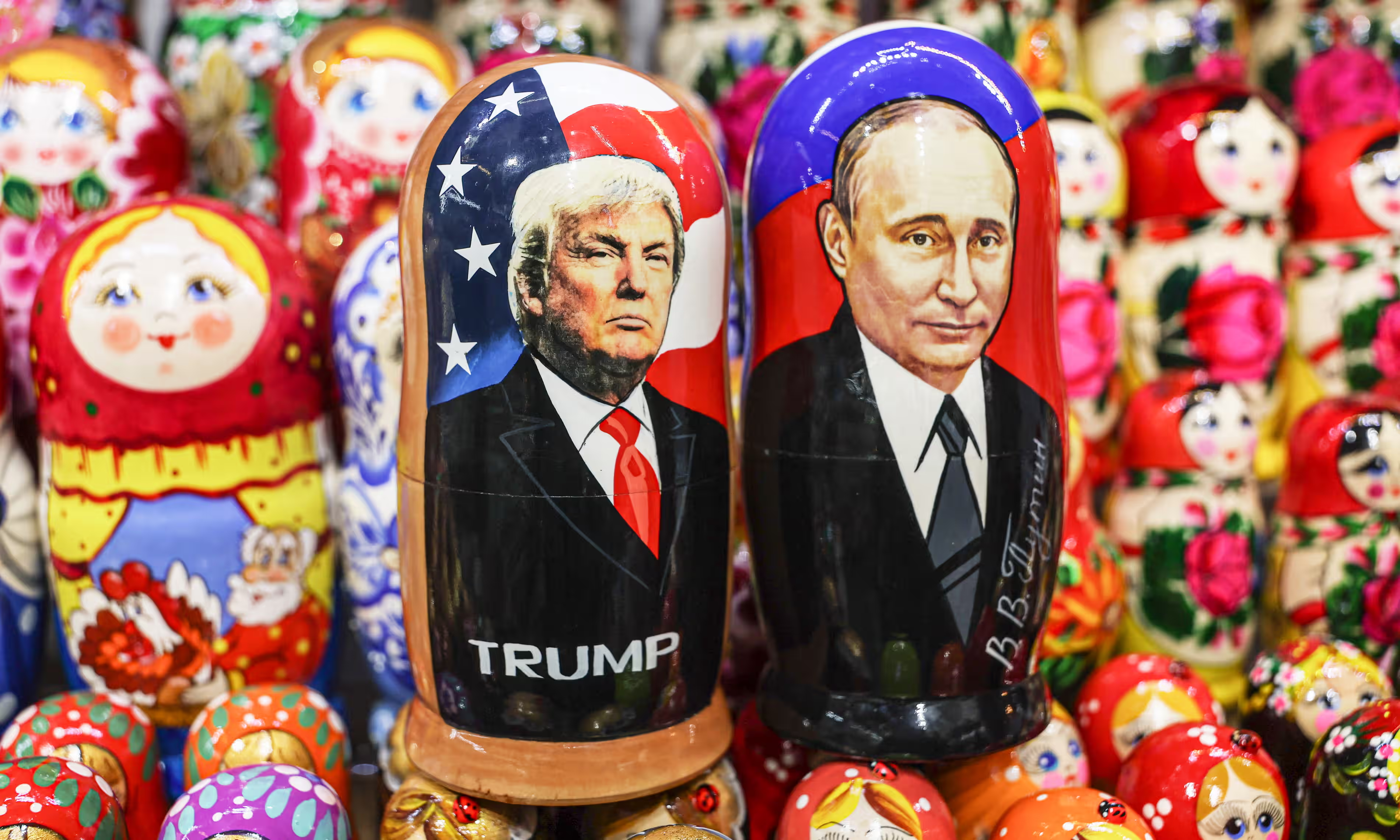
President Donald Trump has held high-profile telephone calls with Russian President Vladimir Putin and Ukrainian President Volodymyr Zelensky, hinting at a U.S.-brokered peace deal to end the Russo-Ukrainian War. While the immediate impact on Kyiv, Moscow, and Washington has drawn most of the headlines, the ripple effects could reach well beyond Eastern Europe. Two scenarios stand out:
- Russia might distance itself from China
- Europe could fracture if the United States withdraws most of its support for Ukraine
Table of Contents
- Trump’s Transactional Outlook
- Russia’s Calculation
- Forecast One: A Russian Pivot Away from China
- Forecast Two: A Fracturing Europe
- Where Do These Scenarios Converge?
- Winners and Losers
- Counterbalances
- Conclusion
Trump’s Transactional Outlook
Since returning to the Oval Office in 2024, President Trump has emphasized “America First” and questioned the cost of ongoing U.S. assistance for Ukraine. A potential peace deal could allow Washington to redirect funds and attention away from Eastern Europe. Trump has framed this approach as ending “endless entanglements” abroad.
For Ukraine, reduced American backing might weaken its ability to continue large-scale military operations. President Zelensky has repeatedly stressed his commitment to Ukraine’s territorial integrity, but international support remains pivotal for Kyiv’s military resilience.
Russia’s Calculation
For Russia, a rapprochement with Washington—especially one that includes significant sanctions relief—would be a major strategic victory. Moscow’s economy has demonstrated resilience despite years of punitive measures, finding new energy markets in Asia and the Middle East. However, the Kremlin remains eager for broader access to Western finance and technology.
If Trump’s administration is open to a deal, Moscow might see more advantages in mending ties with the West—especially if it cements territorial gains in Ukraine—than in maintaining a “no-limits” partnership with Beijing.
Forecast One: A Russian Pivot Away from China
The idea of Russia stepping back from its strategic courtship of China may seem unlikely, but history shows Sino-Russian relations have shifted drastically before.
Key Factors Supporting a Pivot:
- Economic Realities: Russia’s economy is resource-rich and self-sufficient, while China’s growth is dependent on delicate links with Western technology and markets.
- Historical Patterns: Russian elites resist the notion of becoming China’s “junior partner.” If normalizing relations with Washington provides greater economic benefits, the Kremlin could recalibrate its ties with Beijing.
- U.S. Strategy: Washington may attempt a 1970s-style diplomatic shift, this time wooing Russia away from China instead of courting China against the Soviet Union.
Forecast Two: A Fracturing Europe
If the U.S. significantly reduces support for Ukraine, the European Union could struggle to unify around a robust strategy. Divergent national interests already exist:
- Germany and France: Have supported Ukraine but remain cautious about sending advanced weaponry, concerned about economic repercussions and energy prices.
- Eastern Europe (Poland, Baltics): See Russia as an existential threat and demand maximum military support for Ukraine. Without strong U.S. leadership, they may feel vulnerable or take unilateral action.
- Economic Pressures: The EU’s export-driven economy faces twin threats:
- Slowing growth in China
- Possible new U.S. tariffs under Trump’s trade policies
Where Do These Scenarios Converge?
A Trump-brokered Ukraine settlement that includes sanctions relief for Russia could tempt Moscow to scale back its reliance on Beijing. For the United States, such a shift would be a strategic success, allowing Washington to refocus on countering China.
Meanwhile, Europe risks marginalization. If internal disagreements persist, the EU may struggle with security coordination just as the U.S. and Russia forge a new understanding. Some EU nations might prioritize reopening trade links with Russia, while others remain deeply skeptical of the Kremlin’s intentions.
Winners and Losers
Winners:
- Russia: Gains partial recognition of its territorial claims in Ukraine and renewed economic ties with the West.
- United States: Claims diplomatic victory for ending a prolonged conflict while undermining China’s geopolitical position.
- Energy & Agribusiness Giants: Companies positioned to profit from resumed trade with Russia.
Losers:
- Ukraine: Could be forced to accept a deal that cements Russian territorial control.
- China: Facing Western economic pressure, Beijing could be further isolated if Russia pivots towards the U.S.
- European Union: If internal divisions worsen, EU influence on global security could erode.
Counterbalances
Several factors could disrupt these forecasts:
- Russian Hardliners: Some factions in Moscow may resist any pivot away from China.
- U.S. Political Resistance: Even under Trump, bipartisan opposition to easing relations with Russia might emerge.
- European Resilience: If Russia remains aggressive, the EU could rally behind stronger defense coordination instead of fragmenting.
- Ukraine’s Continued Resistance: Even with reduced Western aid, Ukraine may persist in fighting, hoping for future geopolitical shifts in its favor.
Conclusion
The diplomatic flurry around the Russo-Ukrainian War suggests more than just a possible ceasefire—it hints at a broader recalibration of global alliances.
Observers should watch closely for signs of:
- Russia reconsidering its relationship with China
- Europe struggling to maintain unity on security and trade
- The U.S. leveraging diplomacy to reshape the global power balance
Any settlement in Ukraine will depend on the political will of Washington, Moscow, Kyiv, and European leaders—as well as Beijing’s countermeasures. If these developments prove lasting, we may witness a reshaped “Great Game”, defined by new contests for influence, resources, and strategic positioning in the years ahead.